
ELLMENT · HC-130J and HC-144B crew procedures
ELLMENT for HC-130J: an AI crewman that listens, checks, and cites the page.
Offline and advise-only. It listens to recorded crew calls, checks them against the crew's own checklist, and returns a cited flag, “unsure”, or silence. The crew always decides.
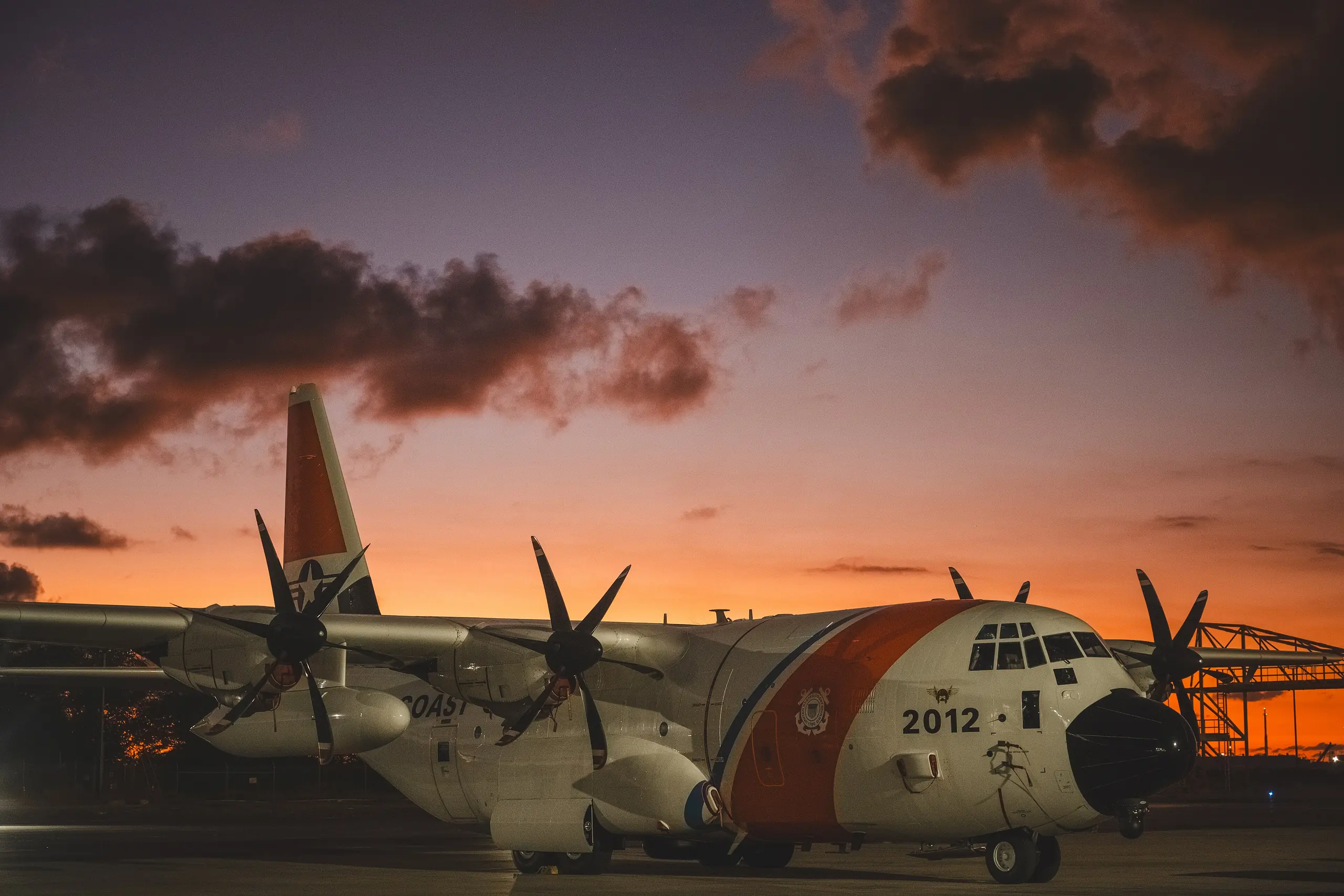
HC-130J at Air Station Barbers Point · U.S. Coast Guard photo by Petty Officer 2nd Class Tyler Robertson, public domain
ELLMENT for HC-130J is ELLMENT, Azcuna Dynamics' offline aircrew decision-support system, configured for HC-130J and HC-144B crew procedures. Long-range patrol crews run radar, sensor, radio and checklist procedures far from any reliable network, so a decision aid has to work with none. ELLMENT runs entirely on its own hardware and never needs one.
ELLMENT was selected for a Navy SBIR Phase I, award pending. This configuration is Azcuna's own work, at its own expense. The offline document core runs today. The audio parser is built, and measuring it on recorded audio is under way. No accuracy figures are published until they are measured.
An example check
A descent checklist with two things wrong: one call never made, and one answer lost under radio traffic. Here is what ELLMENT would show, which rule fired, and why.
The transcript ELLMENT checks, with timestamps.
- 00:00PilotDescent checklist.
- 00:02CopilotAltimeters.
- 00:03PilotSet, cross-checked.
- --:-- No call for Pressurization
- 00:05CopilotLanding data.
- 00:06PilotReviewed.
- 00:08CopilotCrew briefing.
- 00:09Pilot[masked by radio traffic]
- 00:11CopilotLanding lights.
- 00:12PilotOn.
- 00:14CopilotDescent checklist complete.
A flag, an “unsure”, and silence for the rest.
Checklist item not heard: Pressurization.
Source: Example descent checklist, item 2, page [n]
Why
Rule R1: Every checklist item is called and answered before the crew calls the checklist complete.
Evidence: No call for this item before "complete" at 00:14.
Unsure: the answer to Crew briefing could not be heard clearly. No flag raised.
Why
Rule U1: An answer the recognizer could not hear clearly is reported as unsure, never flagged.
Evidence: Overlapping speech at 00:09.
Altimeters, Landing data and Landing lights matched the checklist, in order. Nothing is shown for them.
The crew checks the source and decides. ELLMENT does nothing else.
An invented checklist and invented calls, to show the shape of the output. Not an HC-130J or HC-144B procedure, and not recorded output.
Three ways a check can end
A cited flag, “unsure”, or silence. Nothing else, and never a decision.
A crew calls a checklist complete, but one item was never read aloud. Within seconds ELLMENT shows the rule it checked and the page it came from. The crew checks the page and decides.
If the same call was masked by another transmission, ELLMENT says it could not tell, instead of guessing. Unclear, overlapping or clipped audio ends here, never in a flag.
When the calls match the checklist, ELLMENT shows nothing at all. Silence is the default, so a crew is never asked to look at a screen that has nothing to tell them.
ELLMENT advises, never acts.
No connection to aircraft systems, no commands, no decisions. Flag text is fixed rule text with a page reference, never generated wording, so a crew member can confirm it in seconds and an evaluator can audit every one. A rule whose source revision changes is switched off until it is checked again.
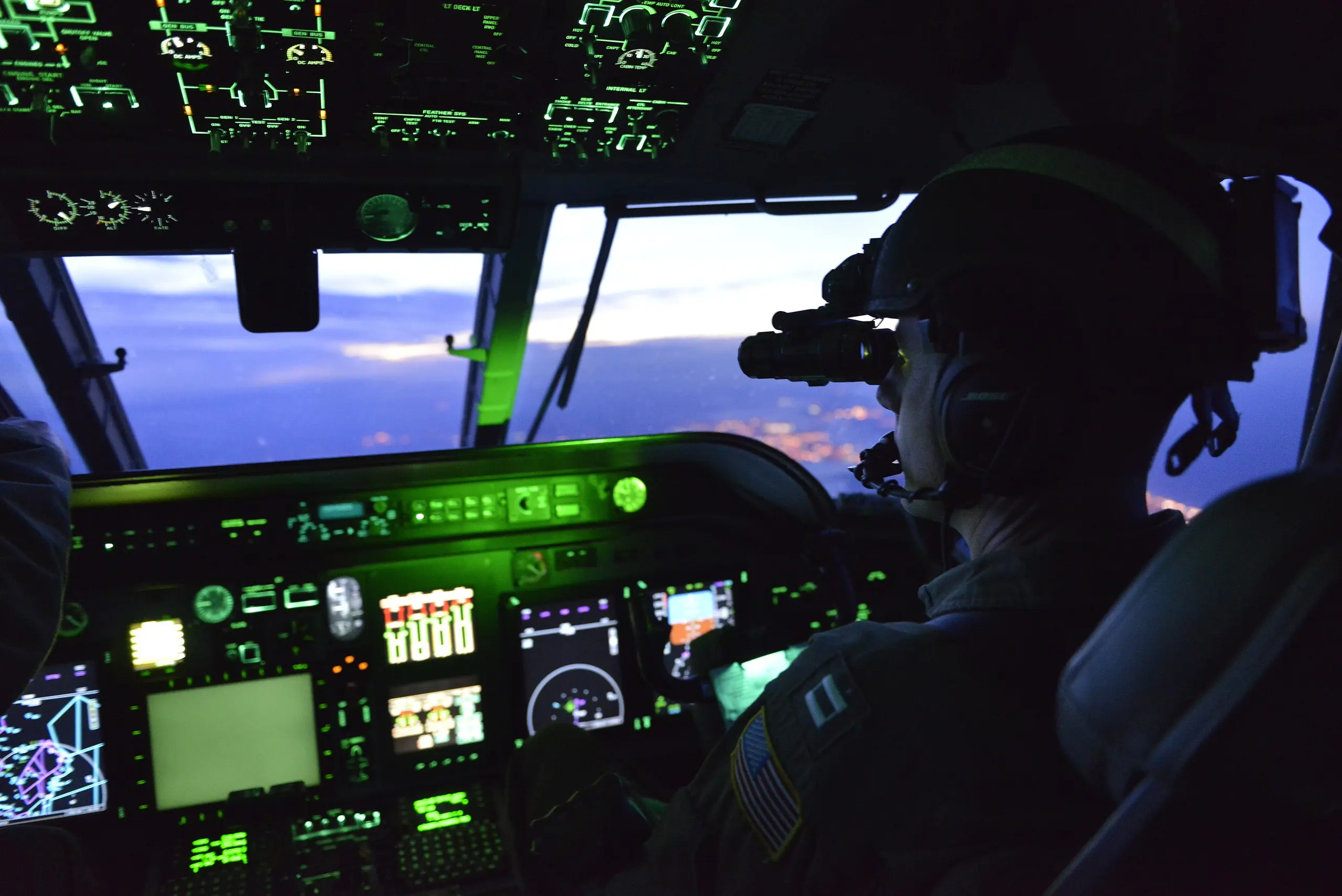
HC-144 flight deck at night · U.S. Coast Guard photo, public domain
How it works
One laptop, no runtime network dependency, four steps.
- 01
Hear
On-device speech recognition turns recorded crew audio into a timestamped transcript. Nothing is sent anywhere: there is no network path to send it on.
- 02
Check
Deterministic rules check the calls. Each rule is a sequence or timing requirement transcribed by hand from the crew's own checklist, and each one carries its document, revision and page.
- 03
Answer, or don't
Every check ends one of three ways: a flag that quotes the rule and its page, "unsure", or silence. Silence is the default.
- 04
Log
Every input, rule version and output is logged on the machine, so a crew or an evaluator can review any flag after the flight.
Rules decide. Models only hear.
An instructor can sign it off
Every rule can be checked against its page and signed off by an instructor. A model's judgment cannot be checked that way. Rules cannot invent a procedure, update cleanly when a checklist changes, and give the same answer every time, so results can be reproduced.
Doubt becomes “unsure”
Learned models are used only to turn speech into text. When the recognizer is not confident, the result is “unsure”, never a flag. Over-trusting a confident wrong answer under pressure is handled in the design: silence by default, a cited page on every flag, and the decision always with the crew.
Retargeted, not rebuilt
ELLMENT for HC-130J is the E-2D system pointed at a new set of procedures. The hard parts were built before this configuration began, at Azcuna's private expense: the offline core, the citation and decline logic, the audio parser and the evaluation harness.
- Runs today
- The offline document core answers from about 1,000 pages of public naval doctrine with page citations on a 16 GB laptop, and declines when the documents do not support an answer.
- Built, being measured
- The audio parser. Its measurement on recorded audio is under way, scored on a held-out test set that is never used for tuning.
- Next
- Procedure rules transcribed by hand from releasable HC-130J and HC-144B checklists, each traced to its document, revision and page.
Two aircraft, one mission system
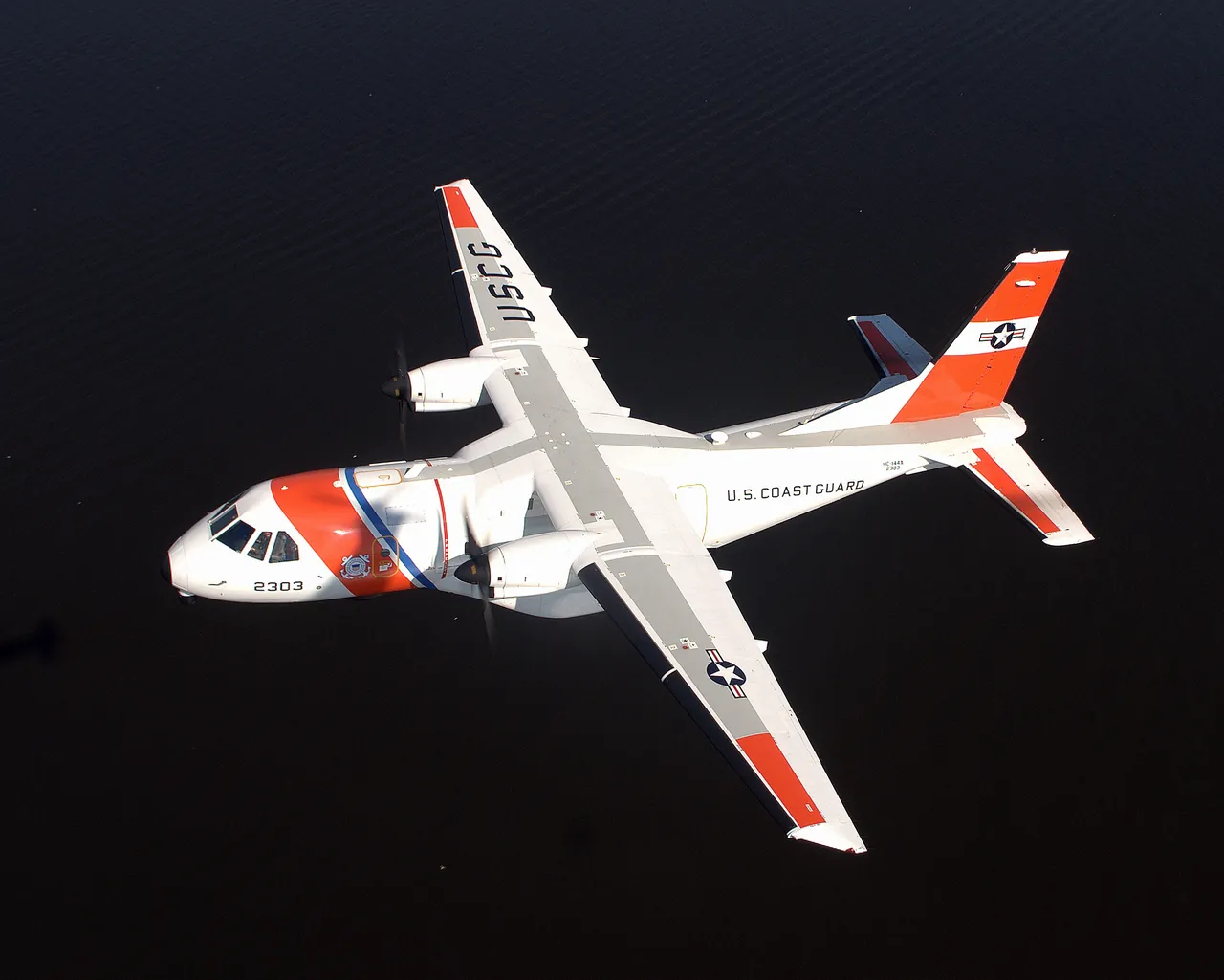
The HC-130J and the HC-144B both fly the Minotaur mission system, so procedure rules built for one carry across to the other. HC-130J first, HC-144B second.
- Aircraft
- HC-130J
- Role
- Long-range surveillance
- Mission system
- Minotaur
- ELLMENT order
- First
- Rule library
- Shared across both aircraft
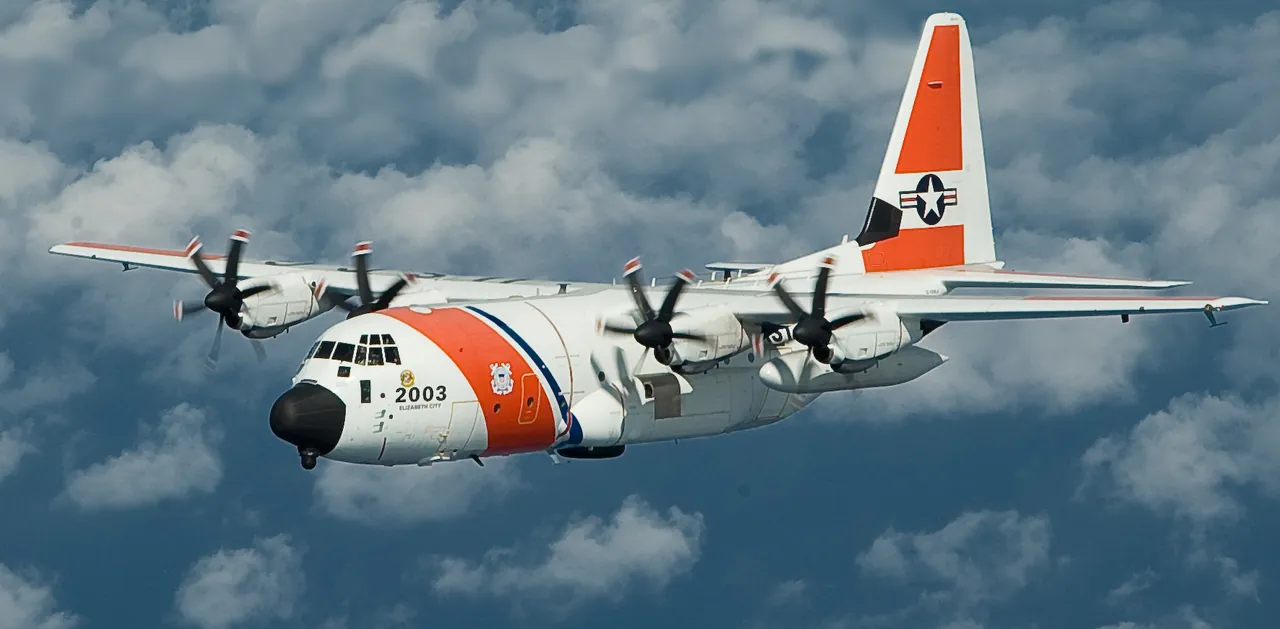
HC-130J in flight · U.S. Coast Guard photo by Dave Silva, public domain
The Coast Guard has described a voice-enabled, offline-capable application for boarding teams, TRITON, that walks a team through required steps. We found no published equivalent for aircrews. ELLMENT is unrelated to TRITON; it is cited here only as public context.
Data stays on the machine
- Zero network egress: with no network path, crew audio and checklists cannot leave the machine
- Any data a customer provides stays on encrypted offline hardware and is returned or destroyed when the work ends
- Every input, rule version and output logged for after-action review
- Development mapped to NIST SP 800-171, in preparation for CMMC Level 2
- U.S.-owned company; no Chinese-origin model weights
- All work unclassified
Questions
ELLMENT for HC-130J is ELLMENT, Azcuna Dynamics' offline aircrew decision-support system, configured for HC-130J and HC-144B crew procedures. It listens to recorded crew calls, checks them against the crew's own checklist, and returns a flag that cites the rule and its page, "unsure", or silence. The crew always decides.
No. ELLMENT advises, never acts. It has no connection to aircraft systems, sends no commands and makes no decisions. It runs on its own hardware with no network connection.
Not measured yet on real audio, so we publish no accuracy figures. The offline document core runs today. The audio parser is built, and measuring it on recorded audio is under way. Results will be published only after they are scored on a held-out test set, with their denominators.
Because an instructor can check a rule against its page and sign it off, and cannot do that with a model's judgment. Rules cannot invent a procedure, update cleanly when a checklist changes, and give the same answer every time. Learned models are used only for speech recognition, and their uncertainty becomes "unsure", never a flag.
Both aircraft fly the same Minotaur mission system, so the procedure rules built for one carry across to the other. The HC-130J is the starting point; the HC-144B follows.
It is the same system, retargeted rather than rebuilt. Built for E-2D Advanced Hawkeye crews, ELLMENT was selected for a Navy SBIR Phase I, award pending. The offline core, the citation and decline logic, the audio parser and the evaluation harness were built at Azcuna's private expense.
No. ELLMENT for HC-130J is Azcuna Dynamics' own work. Azcuna is not affiliated with the U.S. Coast Guard or the Department of Homeland Security, and neither has endorsed this product. Aircraft and system names are used only to describe what it is built for.
ELLMENT for HC-130J is Azcuna Dynamics' own work, built at its own expense. Azcuna is not affiliated with the U.S. Coast Guard or the Department of Homeland Security, and neither has endorsed this product. Photographs are public-domain U.S. Coast Guard images, credited where shown; their use does not imply endorsement. Aircraft and system names are used only to describe what ELLMENT is built for. The example checklist and calls on this page are invented.